
At Sinepower, we know that finding the right product can be an exhausting task. Thus, in this brief article, we would like to specify the main differences between an IGBT rectifier and a 12 pulse rectifier so that when the time comes to choose the best power unit you can make an educated choice.
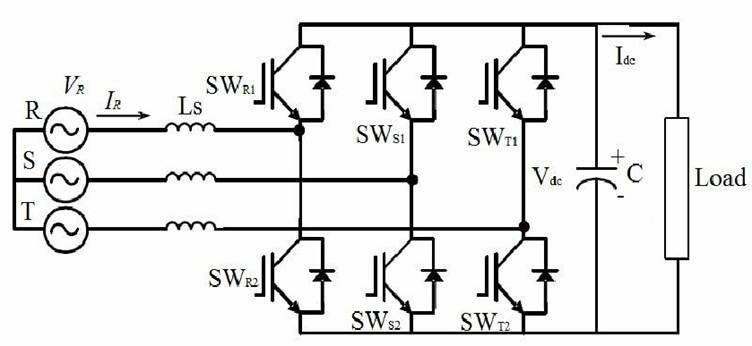
IGBT stands for Insulated Gate Bipolar Transistor. It is a three-terminal electronic device that is used as a switch. IGBTs have a pretty good current handling capacity when compared to standard BJTs (Bipolar junction transistor) and MOSFETs (metal–oxide–silicon transistor). IGBTs are devices whose switching is fully controlled electronically.
IGBT Rectifier:
6 Pulse Rectifier:
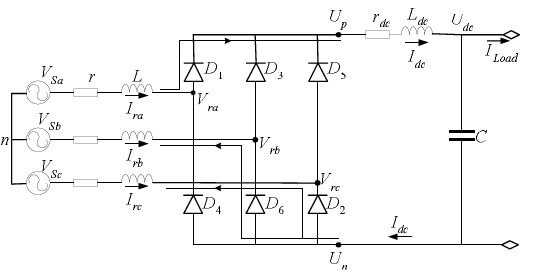
The main advantage of the IGBT Rectifier is the fact it produces a sinusoidal input current with low harmonics at the input with unity Power Factor through most of the load range. The 4 quadrant operation is also an important plus due to its versatility and better response.
In conclusion:
IGBT rectifiers have “cleaner” input currents, which translates into better performance with a small cost in efficiency. In general, they have less ripple factor and better harmonics performance. They easily comply with all the Grid Harmonic Injection regulations, in fact exceeding all the requirements. IGBTs work under more recent technology.
Overall, I could say they are more cost-efficient long-term.
At Sinepower, we use IGBT technology in our SFC and in our V2G chargers, while most of the competition out there still opt for the older 6 and 12 pulse rectifiers.
If you need this solution for your business, get in touch with us right now.
Recent Posts
- We’re now expanding to Asia.
- Empowering Diverse Industries: Sinepower’s Journey in Power Equipment
- Powering the Future: Why Investing in EV Charging Stations is a Smart Move
- Power shifts between an APU and a GPU on an aircraft.
- A Maintenance & Repair Guide for Power Equipment.
Categories
- Company News (8)
- Corporate Events (6)
- Products (6)
- Sem categoria (1)
- Technology (9)